Direct Answer: What Is the Best 5-Minute Morning Routine?
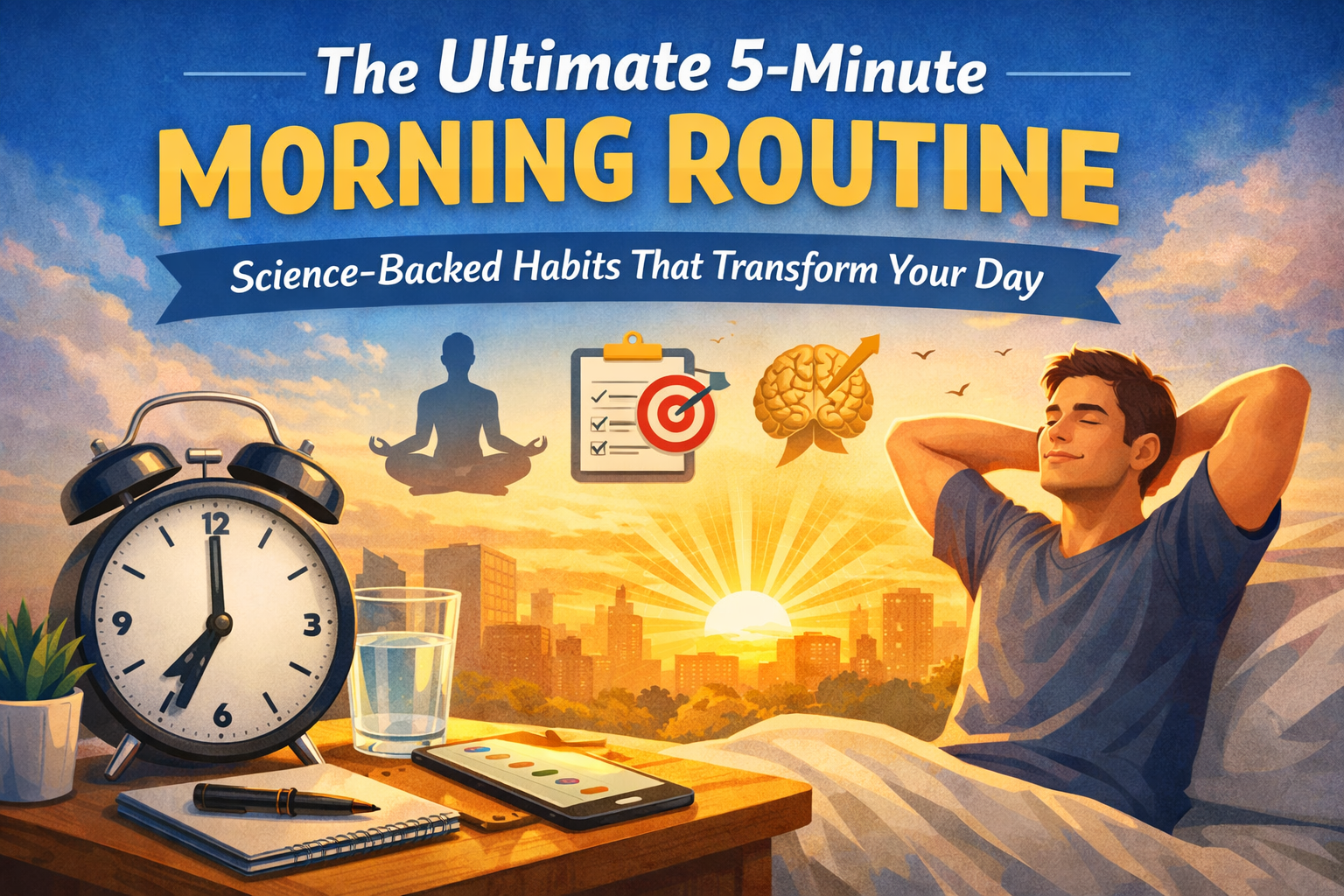
A 5-minute morning routine is a compact, highly effective set of habits that primes your mind and body for the day. Unlike lengthy rituals, this routine delivers focus, energy, and clarity in just a few minutes. Using tools like Routine Architect, you can personalize these five minutes to match your sleep cycle, work schedule, and energy peaks, making it easier to stick to every day.
The most effective 5-minute routine includes:
| Minute | Activity | Purpose |
|---|---|---|
| Minute 1 | Hydration | Rehydrates the body and activates metabolism |
| Minute 2 | Deep breathing | Oxygenates the brain and reduces cortisol |
| Minute 3 | Light stretching | Activates circulation and muscle mobility |
| Minute 4 | Intention setting | Improves focus and productivity |
| Minute 5 | Priority planning | Defines the day’s most important task |
This micro-routine works because it addresses sleep inertia, the groggy state right after waking, and transitions your brain into cognitive readiness. With tools like Routine Architect, you can adjust timings and activities automatically, ensuring maximum effectiveness without requiring a long commitment.
Why a 5-Minute Morning Routine Works (The Neuroscience)
Micro habits work because they align with how our brains naturally wake up and prepare for the day. Short routines reduce decision fatigue and prime productivity by leveraging predictable neurological patterns. Even a 5-minute routine can significantly boost alertness and mental clarity when executed consistently.
Sleep Inertia and the First 10 Minutes After Waking
When we wake, the brain is in theta waves, a low-energy state associated with sleep. Within the first 10 minutes, transitioning to beta waves—linked to alertness—determines how sharp and productive the morning will be. A focused 5-minute routine helps bridge this gap efficiently. Routine Architect can analyze your sleep and suggest optimal wake-up micro-habits to minimize grogginess.
Dopamine Activation Through Micro Habits
Completing small, purposeful actions in the morning triggers dopamine release, reinforcing motivation. Each step of a 5-minute morning routine, from drinking water to stretching, creates positive feedback loops. Over time, your brain associates mornings with accomplishment, making it easier to stay consistent. Tools like Routine Architect track habit completion, keeping motivation high.
Habit Stacking and Cognitive Priming
A 5-minute morning routine leverages habit stacking, linking new behaviors to existing ones. Cognitive priming occurs as your brain prepares for attention-demanding tasks after completing a predictable micro-routine. For instance, stretching followed by intention-setting primes focus, while planning your priority task triggers productivity. Routine Architect can automatically suggest sequences that maximize this cognitive priming effect.
The Core 5-Minute Morning Routine Framework
Breaking the 5-minute routine into clear, actionable steps ensures it’s easy to adopt and repeat. Below is a detailed framework designed for consistency, clarity, and cognitive readiness.
Minute 1 — Hydration Reset
After 6–8 hours of sleep, your body is naturally dehydrated. Drinking a glass of water in the first minute kickstarts metabolism, supports brain function, and increases alertness. Even quick micro-sips can make a measurable difference. Routine Architect can schedule hydration reminders tailored to your wake-up time.
Minute 2 — Oxygen Boost Breathing
Deep, conscious breathing increases oxygen supply to the brain, reducing cortisol and anxiety. Techniques like box breathing or the physiological sigh are ideal. Spending one minute fully focused on breath primes both energy and mental clarity, forming a strong neurological foundation for the day.
Minute 3 — 30-Second Mobility Activation
Quick stretching, neck rolls, spinal extensions, or bodyweight movements activate circulation, reduce stiffness, and boost alertness. Even 30 seconds of movement triggers endorphins, improves posture, and signals the brain that the body is ready for activity. A routine architect can suggest stretches based on your physical needs.
Minute 4 — Intentional Mindset Reset
Spending a minute setting intentions or practicing gratitude shapes your focus. Asking yourself questions like, “What will make today meaningful?” primes goal-directed behavior. This small mental reset significantly influences decision-making and motivation throughout the morning.
Minute 5 — The Daily Priority Anchor
Finally, define your single most important task of the day. Clarifying priorities prevents distraction and aligns your energy with outcomes that matter. Even in five minutes, this planning step ensures you start with purpose. Routine Architect can dynamically suggest your priority based on workload, meetings, and past habits.
Personal Experience: How a 5-Minute Routine Changed My Productivity
Adopting a 5-minute morning routine transformed how I approached the start of each day. Before, mornings felt rushed, chaotic, and unproductive. By experimenting with micro habits, I discovered that small, intentional actions could yield bigger returns than long, complicated rituals. Using Routine Architect, I tracked my micro-habits and noticed patterns in focus, energy, and decision-making that I had never seen before.
The Problem: Mornings That Felt Chaotic
My mornings were full of distractions—scrolling through messages, deciding what to do first, and rushing to start work. This often led to low focus, reactive decisions, and wasted energy. I realized that without a structured entry into the day, my productivity suffered despite spending long hours working. The lack of consistency meant that even important tasks sometimes went unfinished.
The Experiment: Testing Micro Morning Habits
I decided to replace long, overwhelming routines with five highly intentional minutes. Each minute had a single purpose: hydration, breathing, stretching, mindset reset, and priority planning. I used Routine Architect to monitor consistency, suggest improvements, and track completion trends. This experiment showed that small, repeatable actions could produce measurable results without taking over my morning.
The Result: More Focus in Less Time
After 30 days, the results were clear. Work focus improved because my mind was primed for attention right after waking. Decision clarity increased as I started the day knowing the most important task. Daily energy levels felt steadier, reducing the mid-morning slump. Even in just five minutes, this micro-routine produced cognitive activation and momentum that previously required thirty minutes of effort.
Lessons Learned From 30 Days of Micro Routines
Consistency matters more than duration. Short, well-structured routines are easier to maintain and less intimidating. Tracking habits with Routine Architect reinforced accountability and offered data-driven insights to fine-tune each minute. Most importantly, small, purposeful actions at the start of the day compound into higher productivity and better focus, proving that even minimal morning routines can deliver maximum impact.
The 5-Minute Morning Routine for Different Lifestyles
A 5-minute morning routine is versatile. It can be adapted to match energy levels, priorities, and responsibilities, making it suitable for anyone. Using micro routines ensures high consistency and cognitive readiness across different lifestyles.
For Busy Professionals
Busy professionals benefit from routines that enhance mental clarity and task prioritization. Hydration, breathwork, and a priority task check set the tone for high-stakes decision-making. Tools like Routine Architect can suggest adjustments based on meeting schedules and peak focus hours.
For Entrepreneurs and Creators
Entrepreneurs and creators need routines that activate creative thinking. Short bursts of intention setting and mobility exercises prime the brain for innovative problem-solving. Even five minutes can reduce decision fatigue and improve idea flow throughout the day.
For Students
Students gain from routines that improve focus and learning readiness. Deep breathing and intention setting help with attention during classes or study sessions. Micro habits prepare the mind to absorb information efficiently, increasing retention and engagement.
For Parents
Parents benefit from routines that reduce stress and enhance emotional grounding. A structured five-minute start improves patience and clarity before handling family responsibilities. Even a small habit like gratitude or priority planning can make mornings calmer and more intentional.
Data Comparison: 5-Minute vs 30-Minute Morning Routines
| Factor | 5-Minute Routine | 30-Minute Routine |
|---|---|---|
| Consistency | High | Medium |
| Time Barrier | Very Low | High |
| Habit Adoption | Fast | Slow |
| Cognitive Activation | Moderate | High |
| Long-Term Sustainability | Very High | Medium |
Micro routines outperform longer routines in habit consistency because they reduce barriers, minimize resistance, and encourage repetition. Long routines often fail due to fatigue, time pressure, or unrealistic expectations. Tools like Routine Architect can track micro-routines, suggest optimizations, and reinforce habit formation, ensuring that even five minutes delivers measurable productivity gains every day.
The AI Routine Architect Approach to Morning Routines
A 5-minute morning routine becomes even more effective when personalized with AI. Traditional routines follow a fixed structure, but AI can analyze your unique patterns to optimize every minute. Routine Architect leverages AI to suggest the right sequence of habits, based on sleep, productivity, and cognitive readiness, ensuring that your five minutes are both consistent and high-impact.
Using AI to Personalize Your Morning Routine
AI tools can analyze your sleep patterns, productivity cycles, and focus windows. This allows for a routine that aligns with your peak energy and attention. With Routine Architect, hydration, breathing, and priority planning can be scheduled automatically at the most effective time, turning five minutes into a highly targeted, personalized routine.
Adaptive Morning Routines vs Static Routines
Most traditional routines remain static, ignoring changes in workload, sleep quality, or meetings. AI routines adapt dynamically. If you slept poorly, need more focus, or have a packed schedule, Routine Architect adjusts the sequence and duration of micro habits. Adaptive routines ensure the 5-minute morning routine stays effective, no matter how unpredictable your day becomes.
Example AI Routine Stack
A strong AI-powered morning stack includes:
- AI planners for scheduling and reminders
- Habit trackers to monitor consistency and completion
- Productivity automation tools to suggest next actions
Using this stack, even a five-minute routine can trigger maximum focus, energy, and readiness for the day ahead.
Common Mistakes That Break a 5-Minute Morning Routine
Even the most effective 5-minute morning routine can fail if executed incorrectly. Small missteps can reduce focus, motivation, and habit formation. Recognizing these mistakes helps maintain consistency and ensures measurable results.
Trying to Do Too Much
Adding too many activities overwhelms the short timeframe. Five minutes should focus on hydration, breathing, mobility, mindset reset, and priority planning. Expanding it defeats the purpose of a micro routine.
Checking Your Phone Immediately
Immediately opening apps or messages disrupts your focus. Early screen time triggers reactive thinking and stress. Keep the first five minutes phone-free, or use Routine Architect’s reminders to enforce digital boundaries.
Skipping Hydration
Skipping water reduces mental clarity and metabolic activation. Even one glass of water supports brain function and focus. Hydration is the simplest yet most effective first step in your 5-minute routine.
Lack of Habit Trigger
Without a consistent cue, routines fail. Habit stacking or AI notifications from Routine Architect help anchor micro habits, making your routine automatic and reliable.
Advanced Edge Cases & Troubleshooting
AI and data-driven micro routines also help tackle unusual scenarios. Customizing the 5-minute morning routine ensures effectiveness even in non-standard situations.
What If You Wake Up Late?
If mornings start late, a 2-minute emergency routine focuses on hydration, breathing, and priority planning. This condensed approach ensures cognitive activation despite limited time.
What If You Have ADHD?
Use visual cues, timers, and habit stacking to maintain focus. Routine Architect can automate reminders and sequence tasks for neurodiverse needs, making micro routines sustainable.
What If Your Schedule Changes Daily?
Daily fluctuations require adaptive routines. AI tools adjust micro habits based on new priorities, energy levels, and commitments. This keeps the routine effective even with unpredictable schedules.
What If You Work Night Shifts?
Night shift schedules disrupt circadian rhythms. Customize a circadian-adjusted 5-minute routine immediately after waking, emphasizing hydration, breathwork, and light stretching to counter fatigue.
30-Day 5-Minute Morning Routine Challenge
To build lasting habits, a progressive 30-day challenge is highly effective. Begin with essential steps and layer habits gradually. Routine Architect can track completion, suggest improvements, and maintain motivation throughout the month.
| Week | Focus |
|---|---|
| Week 1 | Hydration + breathing |
| Week 2 | Add stretching |
| Week 3 | Add intention setting |
| Week 4 | Add priority planning |
By incrementally adding habits, this challenge turns micro actions into automatic, high-impact routines that stick long-term. Five minutes becomes a powerhouse start to every day.
Tools That Help Maintain a 5-Minute Morning Routine
Even the best 5-minute morning routine needs support to stay consistent. Modern tools help track habits, automate sequences, and trigger cues, making micro routines effortless. Using technology like Routine Architect, you can customize reminders, analyze progress, and ensure each minute is impactful.
Habit Tracking Apps
Habit tracking apps provide visual cues, streak tracking, and notifications to reinforce behavior. Features like progress graphs, completion rewards, and habit reminders make it easier to maintain consistency. With Routine Architect, tracking becomes smarter—AI analyzes trends and suggests adjustments to maximize the efficiency of your 5-minute morning routine.
AI Productivity Planners
AI planners automate routine management, scheduling, and prioritization. They can sequence habits based on your energy, workload, and focus windows. Routine Architect integrates with AI planners to dynamically suggest the best order for hydration, breathwork, and priority planning, turning five minutes into a highly productive, personalized start.
Smart Alarm Systems
Smart alarms can trigger routines automatically, from gentle wake-up light cues to habit reminders. Linking alarms to micro habits ensures the first five minutes are structured and distraction-free. Combined with Routine Architect, smart alarms help enforce consistency, even on unpredictable mornings or irregular schedules.
Frequently Asked Questions About 5-Minute Morning Routine.
Got questions about building the perfect 5-minute morning routine? Here are quick, science-backed answers to the most common questions people ask about starting their day with focus and energy.
1. What is the best 5-minute morning routine?
A short routine including hydration, breathing, stretching, mindset reset, and priority planning, personalized for your energy and focus.
2. Can a 5-minute routine really improve productivity?
Yes. Micro habits prime focus, reduce decision fatigue, and improve energy, creating a ripple effect on overall productivity.
3. What should I do immediately after waking up?
Start with hydration, a few deep breaths, and light mobility to jumpstart your body and brain.
4. Is hydration important in the morning?
Absolutely. Even one glass of water rehydrates, supports metabolism, and boosts mental clarity.
5. How long does it take to build a morning habit?
Consistency matters more than time. Five minutes daily for 30 days can make the routine automatic.
6. Can a short morning routine replace longer rituals?
Yes. Micro routines reduce resistance, maintain consistency, and deliver measurable benefits without long commitments.
7. What is the science behind morning routines?
They leverage habit loops, dopamine activation, cognitive priming, and transitions from sleep inertia to beta wave focus.
8. Are micro habits better than long routines?
For consistency, yes. Short routines minimize barriers, reduce fatigue, and encourage sustainable habits.
9. How can AI help optimize morning routines?
AI tools like Routine Architect personalize, sequence, and adapt routines based on sleep, energy, and workload.
10. What is the best routine for busy professionals?
A 5-minute routine focused on hydration, breathwork, and priority planning, optimized using AI for maximum focus.
Final Thoughts: Small Habits Create Massive Momentum
Consistency beats complexity. Even a 5-minute morning routine can transform your day when executed reliably. Micro routines reduce resistance, build momentum, and create a structured foundation for focus, energy, and productivity. Tools like Routine Architect make it effortless to track, personalize, and optimize every minute.
Start with the simplest version today. Small, intentional actions compound into massive results, proving that even five minutes can shape a highly productive day.